
Category Archives: Bed Nuts & Bolts
Make Your Calming Bedroom for Staying Home
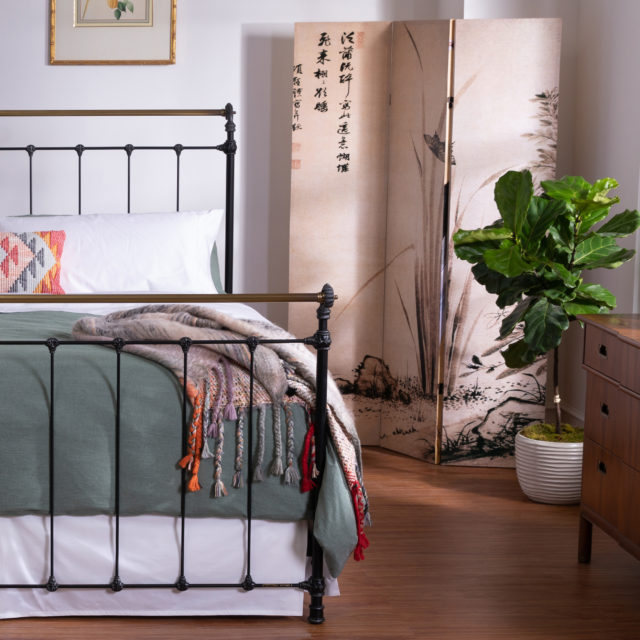
Your bedroom should always be your sanctuary. But now more than ever, it’s important to carve out a comforting, beautiful space in your home for rest. Your bedroom should be an expression of you, and the place you feel most comfortable. We have some tips to turn your bedroom into a calming space, most of which can be done with what you already have.
Start with a good base
The most important thing in your bedroom is – you guessed it – the bed! Make sure your bed is to your style and liking-you should love it and be drawn to it when you walk in the room. Your mattress should also be comfortable and inviting to you. If you’re uncomfortable in your bed, your bedroom will become a source of frustration rather than rest.
Do a Deep Clean and Declutter
Declutter all of your surfaces for a more calming atmosphere. Make sure your nightstand doesn’t have too much on it. Even just a dusting and vacuum can make you feel more comfortable in your space. If you can, try to not have work related things in the bedroom. If your desk is in your bedroom, at least keep your work away from your bed.
Fill Your Walls With Something Meaningful
Now is a great time to take stock of your wall art. Are colors clashing, detracting from a calming atmosphere? If you’re stuck at home, it can be fun to rearrange your wall art from another room for something new. Move meaningful things to the bedroom that make you feel calm and at home.
Add Cozy Textiles
Another opportunity to hack your own home is in your textiles. Move that ultra soft blanket from the living room to your bedroom. Bring in anything that makes you feel like your bedroom is a sanctuary.
Add Some Plants
While most of us are housebound, it’s important to bring the outdoors in. Transfer some of your plants to your bedroom, or pot some new ones, to breathe better at night and foster a calming environment.
Pay Attention to Your Senses
Make sure the light levels are low when you’re trying to sleep-make sure there’s no displays glowing or light coming in from outside. Play some calming music, or turn on ocean sounds to sleep to. Pick a comforting signature scent for your room-try things like lavender or vanilla.

3 Quick Tips for Mattress Buying
Whether it’s online or in store, buying a mattress can be a daunting task. There are a myriad of choices -whether it’s springs or foam, soft or firm, a brick and mortar store or an online startup. Rogers is here to help with a few quick tips to jumpstart your mattress searching. By following even just these three things, you’ll be on your way to better sleep.
Pay attention to price. Don’t believe every deal.
Mattress companies like to take advantage of every markup they have, constantly giving too good to be true deals. And while there are often legitimate sales available to you, be careful not to choose the cheapest option possible. The cheapest mattresses are still an investment, and they might not last quite as long as you would expect. This means you’ll have to replace it sooner and will end up spending more in the long run. Consider comfort, durability, and price when you’re shopping. Not just price alone.
Buy from a reputable company.
Making good mattresses takes experience. It is a large purchase-an investment even- and you’ll want to find a trustworthy manufacturer. You not only want a company that has been around for awhile, but one that provides you with enough choices to make a personalized decision.
Pick what’s best for you, personally.
Everyone may have their own opinion on what mattress is best, but the truth is that all bodies are different. One mattress might be better for your body than your friends, or another online reviewer. Once you’ve chosen a reputable company to buy from, pick the mattress that is best suited to your sleep.
Bed Sizes- A Guide to Mattress and Bed Sizes
Choosing the right mattress size can be confusing. This short guide will explain mattress sizes and the relationship to the decorative bed so you can choose the right combination.
There are two main points to remember when dealing with mattresses and bed sizes.
- Mattresses have set sizes.
- Beds fit specific mattress sizes but have different dimensions.
When buying a bed and/or mattress, be sure the bed dimensions are appropriate to fit in your bedroom and the mattress is the correct size for the bed and your needs.
U.S. mattress sizes
- Daybed 33” wide by 75” long
- Twin 39” wide by 75” long
- Twin Extra Long 39” wide by 80” long
- Full/Double 54” wide by 75” long
- Queen 60” wide by 80” long
- King 76” wide by 80” long
- California King 73” wide by 84” long
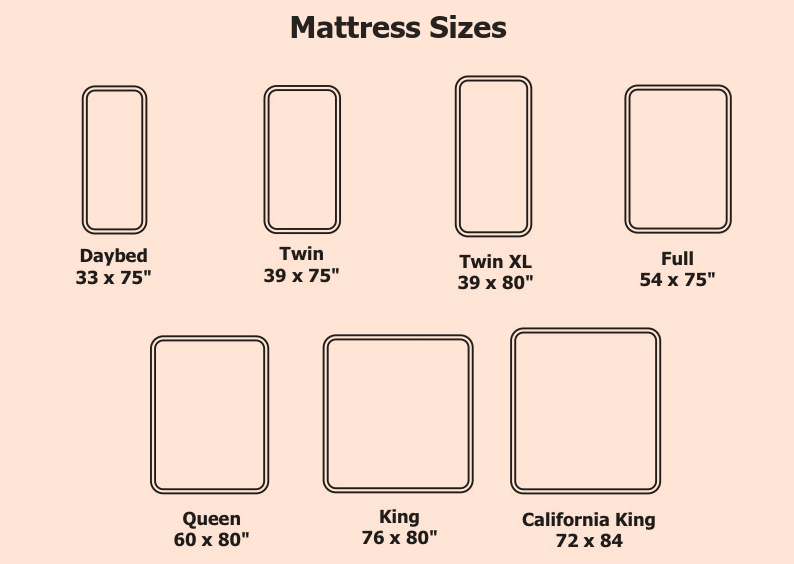
There are different mattress standards used throughout the world and even some odd sizes that are in use in the United States, but we will leave that for another post.
This is a bit more information about each of the most common mattress sizes currently used in the U.S.
Daybed mattress
A traditional daybed is a good size for offices, living rooms or other small areas that need an extra sleeping surface for occasional use. The sheets may be more difficult to find due to the narrow width. Our decorative daybeds often come in either the traditional 33” width or the more modern 39” twin size. The standard twin size can serve as a more permanent solution and the sheets and bedding are easier to find.
Full/Double mattress
The full size, or as it is sometimes known the “double” was the main mattress size for many years before the invention of the larger contemporary sizes. It give extra room compared to the twin and is great for kids, teens, single people, or smaller adults who are shorter in height due to it’s overall length.
Queen mattress
The queen mattress is a very popular size with couples and single sleepers that like more room. The bedding is widely available and the mattress will fit in most average bedrooms. It is suitable for average to tall heights and general has enough width for average sized adults.
King mattress
The standard king mattress, also know as the “eastern king” size has become more popular in recent times due to it’s generous width. It is a great model if the room has space and is a good option for bigger or couples that simply like a lot of space when they sleep.
California king mattress
Introduced in the 1960’s the California king is slightly narrower than a standard king but has an increase in length for the taller person or couples. The bedding is now widely available and gives that extra length and comfort to those who need it.
Foundation and Mattress- What’s the relationship?
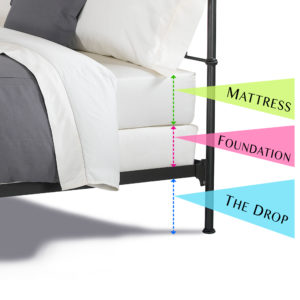
A new mattress can be really tall, making it feel like you are climbing a mountain to get into bed. That’s why good manufacturers ( like Charles P. Rogers) offer 2 options on the height of your foundation at no difference in price or performance; Low Profile or Regular Height.
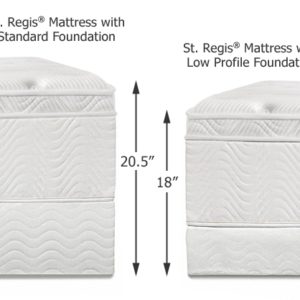
Why Get A New Foundation - Your new mattress, a significant investment, needs proper support. Many folks consider using their existing foundation rather than buying a new matching foundation: it’s seen like an add on rather than a necessary purchase. But ask yourself, why you are replacing the mattress? Poor comfort & support? Valleys & depressions? Your foundation could be as worn as your mattress, it wont give your new mattress proper support, nor proper alignment for you and your partner. Your brand new mattress might break down even more quickly than you’d like.
Bed Nuts & Bolts: Squeaks and Creaks
Post by Jessica Schoenenberger.

While it might not be monsters under your bed, listening to squeaks and creaks can be annoying. Here’s a simple review of what might be causing you to loose a quiet’s night sleep:

Levelize Your Playing Field
Check to see if you floor is level. If you don’t have a level playing field your bed will go out of square. It means the corners are no longer at 90 degree angles. That could also happen if two feet or wheels are on the rug and two are on the wood floor, making the bed higher in some areas than others. When your bed is out of square, parts of it will rub against other parts, causing noise. If your bed uses a foundation/box spring it too will go out of square, following the misshape of your floor. If this is what’s happening in your room, you want to catch the problem early to avoid damage to the mattress and foundation, as well as the furniture.
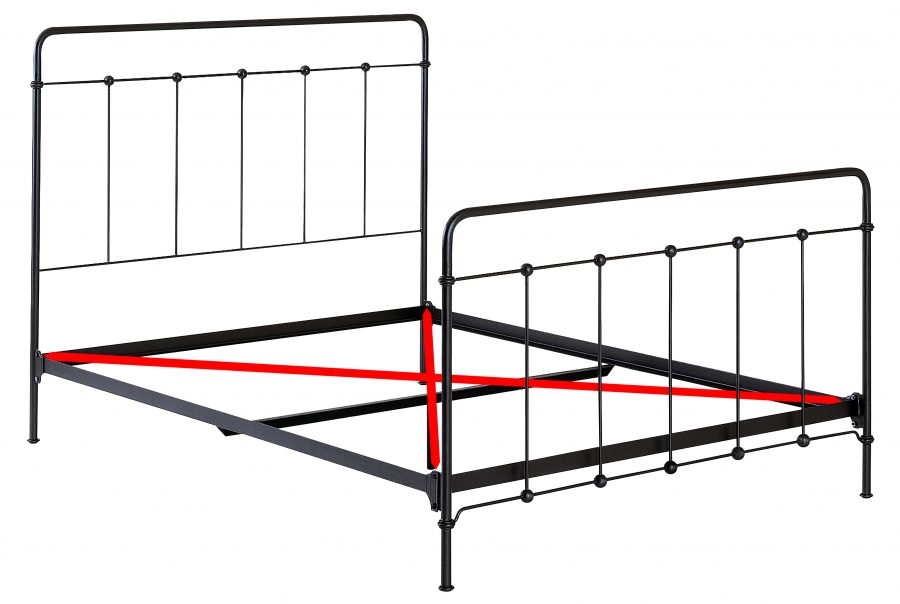
An easy way to find out if your bed is in square is to measure the diagonals like a big X. When each length of the X is the same then you bed is in square. If your bed has become a trapezoid, loosen the hardware and adjust the rails until those diagonals measure the same lengths, then tighten your hardware. No need to strip threads, tighten just enough.

If your bed is in square but you floor is not level, either use shims to have all four corners the same height or adjust the levelers on your feet to compensate.
Furniture Squeaks
To determine if the noise you hear is the coming from the furniture or the foundation, take the mattress & foundation off the bed and place it on the floor. Bounce around and see if you still hear the noise when the set of bedding is on the floor. If your foundation has warped, you will need to replace it. Besides the noise it may be negatively impacting on the support your mattress, hence the support you get.
Clunking Noises
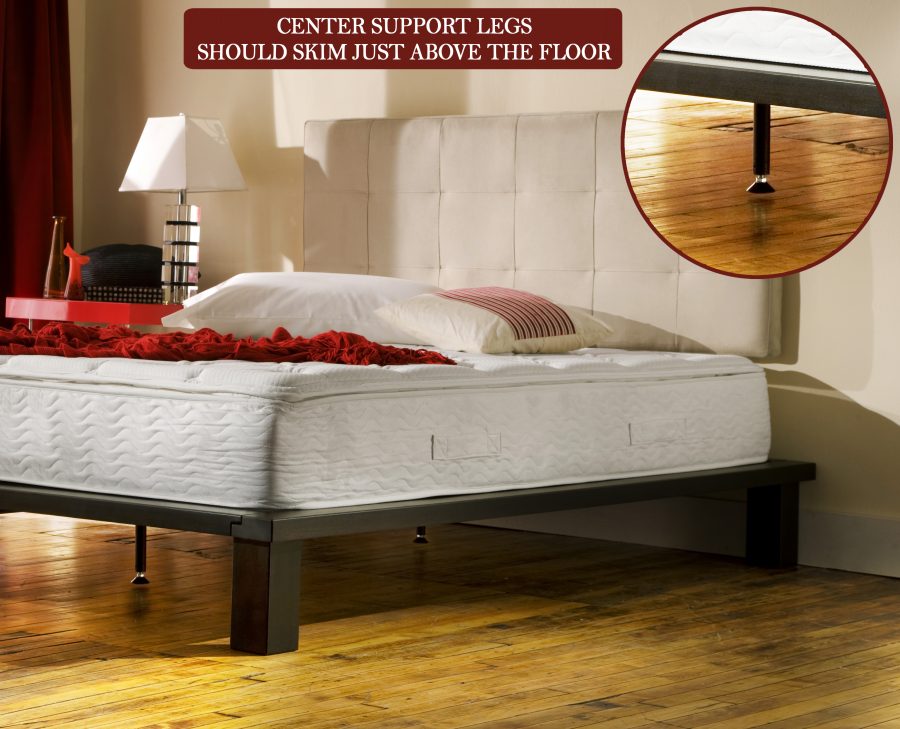
A clunking noise, when you sit on top of your mattress, could be a center support leg issue. All Queen, King and Cal Kings beds must have additional center support rail with leg(s) to the floor for proper long range care. Take a look underneath the bed at your center support legs. They should just be skimming off the floor. When you and/or your partner are on top of the bed, that’s when they touch down. Now that you have chased the monsters away, use the space under your bed for storage.


